5-axis machining produces complex parts and allows machinists to manipulate tools and workpieces across five separate axes. With this capability, you can streamline operations, cut production times, and meet tighter tolerances. However, your tooling determines the overall success and quality of the process. Here’s a closer look at 5-axis machining and the tooling you might need to achieve consistent and accurate results.
What Is 5-Axis Machining?
5-axis machining is a method that uses a special type of CNC machine that allows the cutting tool to move in five different directions at the same time. Most machines are 3-axis ones that only move in three straight lines called the X, Y, and Z axes (side to side, front to back, and up and down). However, 5-axis machines can also rotate the tool or the workpiece, giving you two additional movements. This extra flexibility allows you to shape complex parts, such as curved or angled surfaces, without needing to stop and reposition the material.
Reduced setup time is one major benefit of the 5-axis machining process, as the workpiece doesn’t need constant re-clamping or movement. For intricate components, such as turbine blades or aerospace parts, consistent alignment is essential. With 5-axis machining, you’re always able to maintain precise alignment through fewer interruptions. Additionally, its multidirectional machining reduces the risk of errors from repositioning, ensuring a smooth production flow.
5-axis machining also enhances tooling longevity. Since the cutting tool engages the workpiece at optimal angles, wear distribution remains even, reducing stress on individual tool components.
End Mills
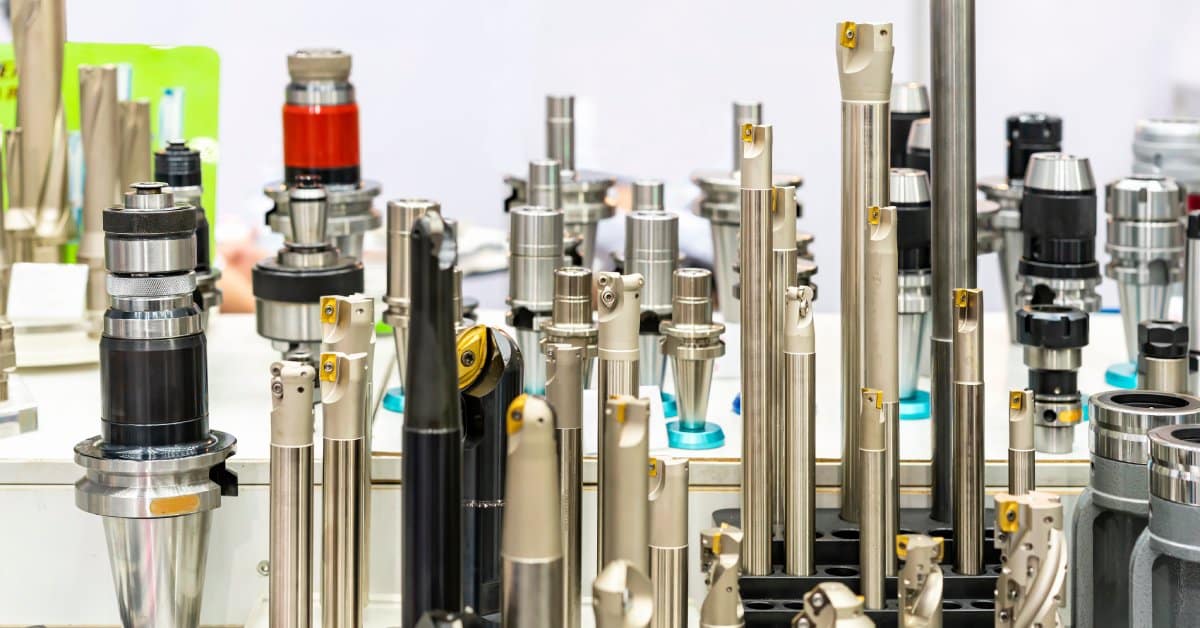
End mills are among the tooling you might need for 5-axis machining. These tools feature various designs, each tailored for specific applications or material types. From roughing to fine finishing, the geometry of an end mill directly determines its performance.
Carbide end mills handle high-speed cutting and hard materials due to their heat and wear resistance. High-speed steel (HSS) end mills, while less heat-resistant, perform well in less demanding processes. You can enhance their durability by coating these tools with titanium nitride or titanium aluminum nitride.
Additionally, the cutting edge’s shape defines the end mill’s capabilities. Ball nose end mills handle contoured surfaces seamlessly, supporting sculpted, curved designs. Flat end mills create sharp corners and detailed edges. For intricate precision finishing, smaller-diameter end mills provide the necessary control.
Tool stability drives successful 5-axis machining, and end mills play a direct role in maintaining it. Poor-quality or mismatched tools may cause vibrations, uneven finishes, or machine damage. Using high-quality end mills ensures consistent results across complex projects.
Drill Bits
With their wide range of sizes and shapes, drill bits address everything from pilot holes to intricate internal features. The flexibility of 5-axis machining further enhances accuracy, especially on off-angle drilling tasks.
Cobalt drill bits excel in high-temperature environments and cut stainless steel and cast iron. Polycrystalline diamond (PCD) drill bits offer better wear resistance and accuracy when working with abrasive materials such as graphite and composites. Ceramic drill bits provide exceptional hardness and heat tolerance, allowing them to machine high-temperature alloys and hard metals.
Different drill bit designs fit specific applications. Center drill bits help create accurate pilot holes, minimizing the risk of walk-off when starting a cut, while spade drill bits remove large volumes of material quickly.
Face Mills and Chamfer Mills
Choosing between face and chamfer mills depends on the type of cut you need to perform. If you need wide, flat surfaces, face mills should be your go-to tool. They allow you to remove material quickly during roughing stages while also delivering smooth, even finishes. The dynamic axes of a 5-axis machine allow you to align the tool perfectly to achieve tight tolerances and flawless finishes.
Chamfer mills help you refine your parts. Use them to create beveled edges, clean up burrs, or prepare pieces for assembly. These tools add precise, angular cuts that improve both the look and functionality of your components. When paired with a 5-axis setup, chamfer mills stay aligned across multiple planes, so you can handle complex geometries with ease.
However, it’s important to note that your results rely on calibrating each tool. You must also evaluate the project’s demands and focus on geometry, cutting speeds, and feed rates. By maintaining proper alignment in a 5-axis setup, you can prevent errors and ensure consistent results across your workpieces.
Machine Reamers
Machine reamers complete bore sizing and finishing. These tools refine and enlarge drilled holes, delivering a smooth, accurate finish with minimal effort. Unlike drills or standard cutting tools, reamers remove small amounts of material with controlled accuracy.
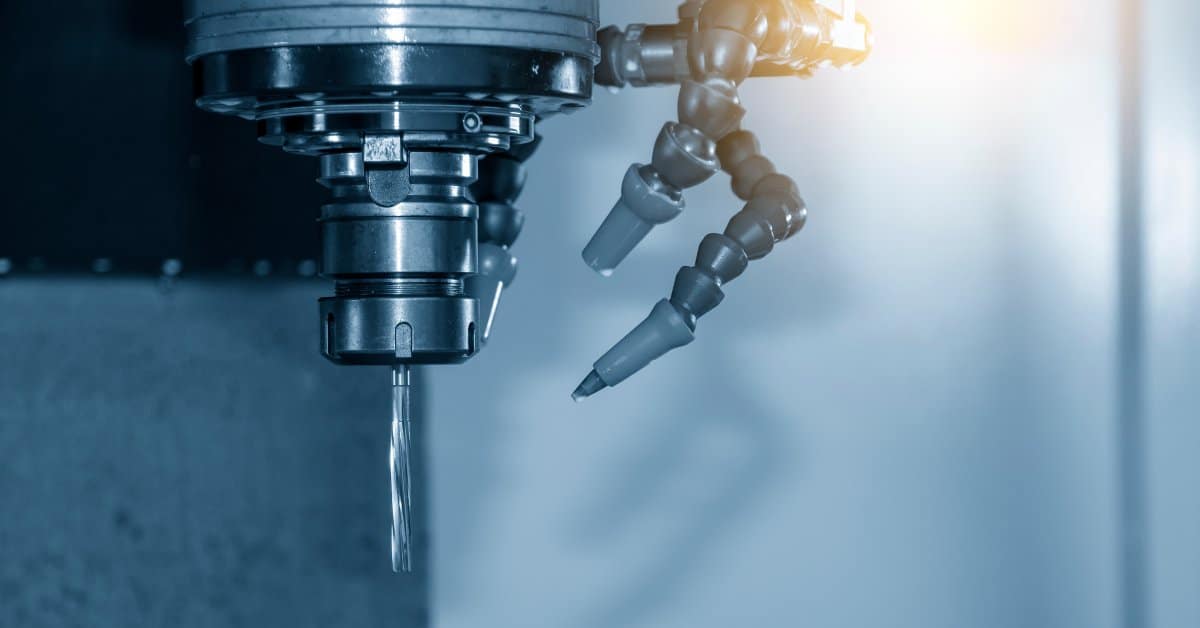
In 5-axis machining, machine reamers support parts that demand tight tolerances. The tool ensures that bore diameters remain uniform across multiple parts. Depending on the workpiece, you can find reamers in various materials, such as HSS or carbide. Carbide reamers, with their strong and wear-resistant nature, work well for abrasive materials, while HSS reamers suit general-purpose machining.
Reamer geometry also varies to suit specific performance needs. Many machinists use straight-flute reamers for general reaming tasks, while spiral-flute reamers achieve precise results for applications involving interrupted cuts. For increased customization, modular reamers allow you to swap out cutting heads based on project-specific demands.
To maximize results, monitor spindle speed, feed rate, and alignment closely during 5-axis machining. Following these parameters reduces chatter and material deformation, ensuring proper bore finishes on every workpiece. Consistently fine-tuning these settings also extends tool life.
Boring Tools
Machinists rely on boring tools to achieve tight tolerances and refined internal surface finishes. These tools adjust machined holes to precise diameters while maintaining smooth finishes throughout the process. Unlike reamers, boring tools handle larger adjustments and manage more complex machining sequences.
You can use boring tools for deep bores on structural components or to maintain uniform lengths on production parts. Multifunctional boring heads for 5-axis machining let you fine-tune dimensions directly on the machine. Whether you’re refining a pre-drilled hole or creating specialized geometric patterns, boring tools deliver consistent results across all parts.
Pay close attention to cutting speed, alignment, and tool geometry to maximize performance. Misaligned tools create inconsistent hole profiles, leading to rework or wasted material. When you calibrate boring tools effectively, they ensure superior results and maintain smooth production workflows.