Metalworking is a crucial craft that plays an invaluable role in a wide range of industries. There are plenty of things you need to learn if you’re going to run a successful metalworking shop, including what kinds of tools your workflow needs. From making your initial measurements to giving a piece a polished finish, every step of the metalworking process requires specialized tools that you can depend on. Learn your way around the most important tools every metalworking shop needs with this guide.
Measuring Tools
Metalworking relies on precision. That’s why measuring and marking tools are a critical part of designing, cutting, testing, and more. The right measuring tools help you ensure every cut you make is precise and accurate. Measuring tools also play a role in quality control and help you deliver high-quality pieces with every project you take on. Below are just a few examples of the most common measuring tools to include in your shop’s inventory.
Rulers, Protractors, and More
Sometimes, it’s the simplest tools that are the most useful. Rulers, measuring tapes, protractors, combination squares, and other common tools offer a handy way to create and mark precise measurements for a wide range of projects. Levels are another common but essential tool that can help ensure your project comes out even and balanced. Stocking up on these basic essentials is a great start to making sure your shop has everything it needs to create high-quality pieces.
Calipers
Calipers are precision measuring instruments that consist of a scale and adjustable jaws that you can manipulate to determine internal or external distances of a piece. There are many different types of calipers, including vernier calipers that use a detailed metric scale, dial calipers with a dial indicator, and digital calipers with an LCD display.
Micrometers
Micrometers make it easy to measure short distances accurately. They’re extremely useful in determining the thickness of materials. They consist of an anvil and an adjustable spindle. The spindle moves to pinch the material you want to measure in place. From there, you can read the measurement either on the micrometer’s physical scale or, in some cases, on a digital display. Variations of this tool include inside micrometers, bore micrometers, and tube micrometers.
Metal Cutting Tools
Metal cutting tools should make up a huge portion of your equipment. From the repetition of a drill press to the versatility of a set of drill bits, you won’t get far without the right cutting tools at your disposal. Investing in high-quality drills, taps, and other cutting tools is the key to ensuring a sharp, precise cut every time you work on a piece.
Band Saw
The band saw delivers one of the most standard operations for metalworking shops: cutting a clean, straight line through metal. Band saws are safer and easier to use than handheld saws. They deliver cleaner and more accurate cuts, too. There are two types of band saws; vertical band saws remain stationary as you move the material across the blade, while horizontal band saws hold the working piece in place while you move the saw itself.
Drill Press
A drill press is a stationary drill that can drill multiple types of holes with extreme accuracy and consistency. One of the biggest advantages of drill presses is that they can deliver precise drilling specifications over and over again with better speed and reliability than other drilling tools.
Drill Bits
You can’t run a shop without a dependable set of drill bits. Drill bits come in a wide variety of lengths, flute types, materials, and coating options. Matching the right drill bit to the specific project you’re working on is essential for achieving a clean, efficient, and accurate cut. That’s why it’s important to have a comprehensive set with a variety of drill bits to use for all the different types of metals and pieces you work with.
Thread Taps
Like drill bits, thread taps are essential cutting tools that play a role in a vast range of projects. Thread cutting taps create the threading for screws. Like drill bits, there are a variety of thread taps and other tapping tools you can choose from, so it helps to invest in a tapping set with a versatile range of options.
Milling Tools
Milling machines help cut and shape a piece through the use of rotary cutters. They aren’t as fundamental to a machine shop as drilling and threading tools, but milling is still an invaluable process for working with flat or irregularly shaped surfaces. Plus, with a wide variety of end mills, side mills, and other cutter options, your milling tools can be a powerful and versatile addition to your shop.
Finishing Tools
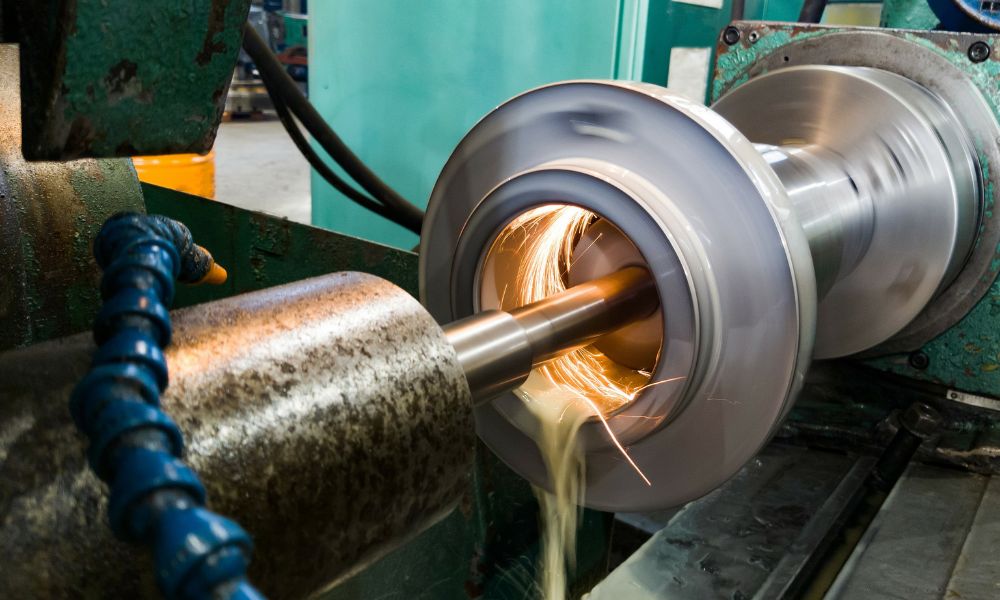
A project isn’t complete until it has a proper finish. The right finishing tools help clean up your workpiece and perfect its surface to improve the look and functionality of the piece. Much of the finishing process comes down to the types of grinders and abrasives you use.
Angle Grinders
An angle grinder is a handheld grinder option. Its light weight and easy portability make it an incredibly flexible tool that you can use for countless applications, especially if you choose a cordless model. In addition to acting as a grinding abrasive, angle grinders also serve as basic cutters. You can use them to clean and polish a workpiece as well, making them an essential part of the finishing process for many projects.
Bench Grinders
Bench grinders are the benchtop alternative to angle grinders. This powerful tool works well for rough grinding as well as finer applications like cutting, shaping, cleaning, and polishing. You can also use bench grinders to sharpen your drill bits and other metal cutting tools.
Abrasives
You can’t complete your finishing process without some kind of abrasive. There is a wide variety of abrasive options to choose from. Different materials and grit sizes affect whether a certain abrasive is good for grinding, honing, sanding, buffing, polishing, or other applications. Because abrasives play a role in so many critical tasks throughout your metalworking shop, it’s important to invest in a variety of high-quality materials to help get the job done.
Invest in Quality at TMT Toolbox
Keeping your business stocked with the most important tools every metalworking shop needs doesn’t have to be a hassle. When you choose TMT Toolbox as your machine tool supplier, you can shop a vast inventory of premium tools from top brands in the industry. Find everything you need to keep your shop running smoothly at TMT Toolbox.